One single partner for biomethane metering and analysis
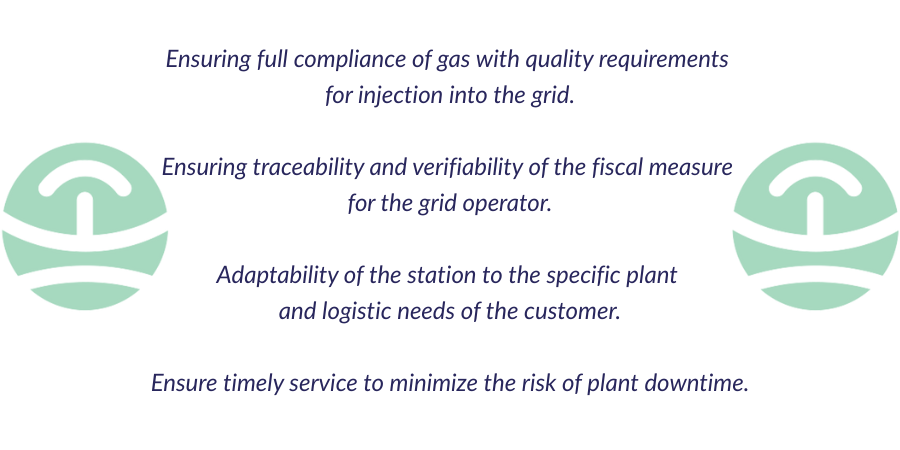
Biomethane enters the grid only when it is safe, compliant and fully accounted for.
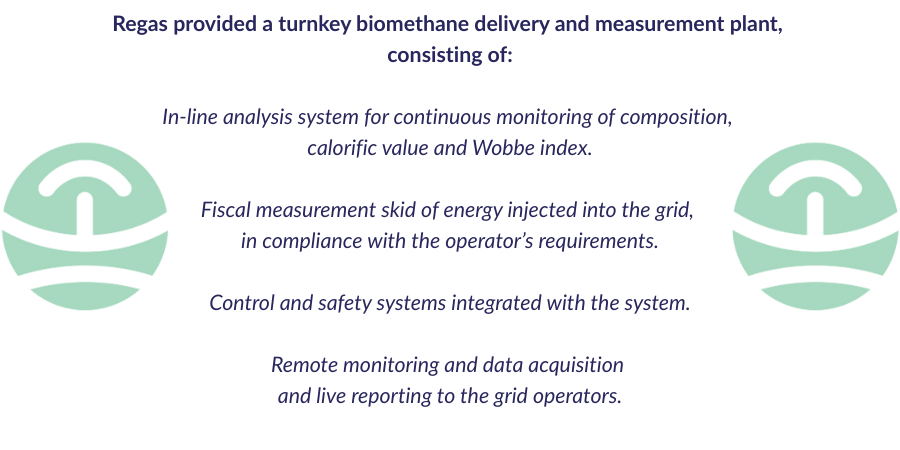
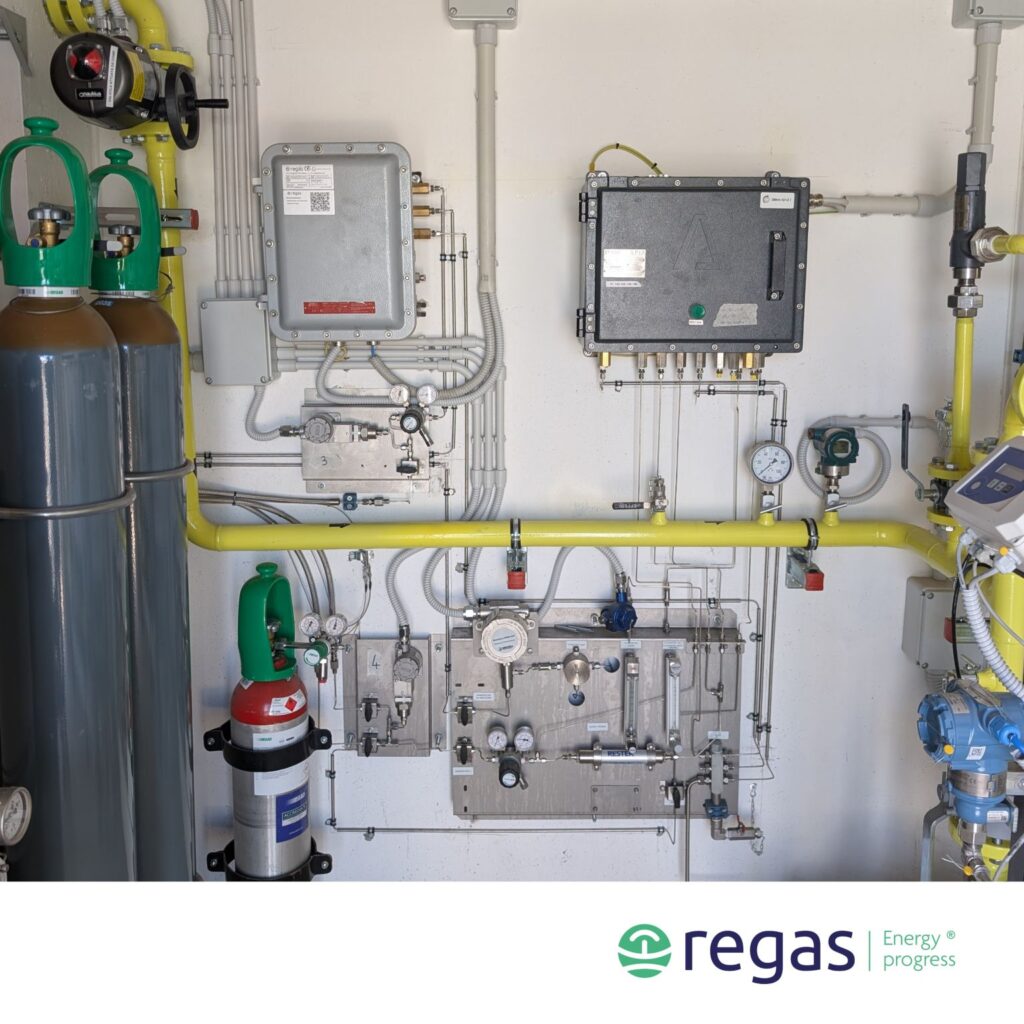
Regas designs and manufactures feed-in stations that integrate fiscal flow and energy measurement, continuous gas quality analysis, pressure regulation and odorization into a single system. RegasBiomethane Stations are all-in-one and tailor-made solutions designed for for direct network injection, CNG trailer loading, liquefaction system and natural gas for vehicles.
FIeld Experience More than 80 biomethane plants served in OFMSW, municipal water, agricultural waste and animal bio-products in compliance with the regulatory requirements.
Know-how in gas measurement We have been involved in natural gas measurement since 1998: this expertise is now applied to renewable gases, with the same precision and reliability.
Digitalization and remote control Telecontrol, data historization and diagnostic support enable continuous and proactive monitoring of gas quality, measurement and plant status.
Service and Support A network of trained technicians ensures startup, scheduled maintenance and prompt service, minimizing unplanned downtime.
Regulatory Compliance Our plants are designed according to local standards and grid operators requirements.
Modular and scalable solutions Skids and modules that can be configured according to flow rates, site layouts and plant growth phases: from the pilot configuration to more complex plants.
CaseStudy
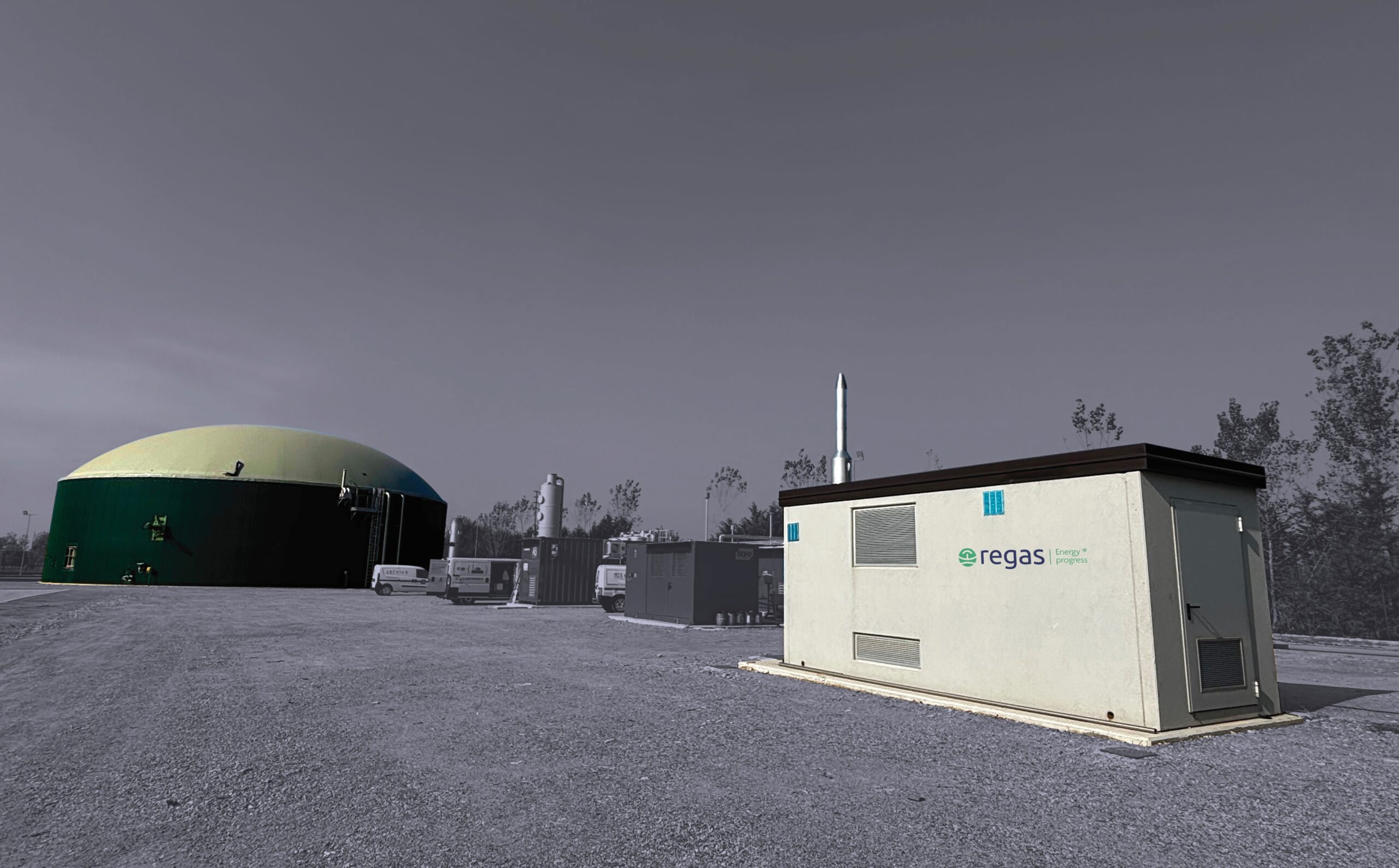
Biomethane station for biogas upgrading plant, Italy
Bizzoni’s farm in Caravaggio (ITA) chose to enhance wastewater and by-products through an anaerobic digestion plant with biomethane upgrading intended for feeding into the gas grid. The goal was to maximize hours of operation and minimize downtime due to gas quality and metering problems.
Advanced solutions to inject gas back into the transmission network
In many local grids, the growth of biomethane production can lead to saturation situations: the distribution network can no longer absorb all available renewable energy and production is penalized.
Reverse Flow solutions allow gas to be transferred from the distribution network to the transportation network, freeing up capacity, keeping plants running and fully valuing the biomethane produced.
In this field, Regas designs tailor-made RE.MI. station that integrate deodorisation, compression, cooling, gas analysis and measurement, fully compliant with the local regulation.
CaseStudy
Reverse Flow Plant – Italy
At the IPRM site in Avetrana (TA), Italgas has built one of the first reverse flow plants in Italy, as part of the pilot projects incentivized by ARERA Resolution 404/2022/R/gas. The objective was to find a concrete solution to the problem of saturated local distribution networks, which prevent renewable gas production from being fully exploited and limit the overall flexibility of the gas system. The plant operates over an indicative pressure range from about 3 bar up to 70 bar, allowing gas to be transferred from the distribution network to the transportation network safely and in compliance with the technical requirements of the system.